

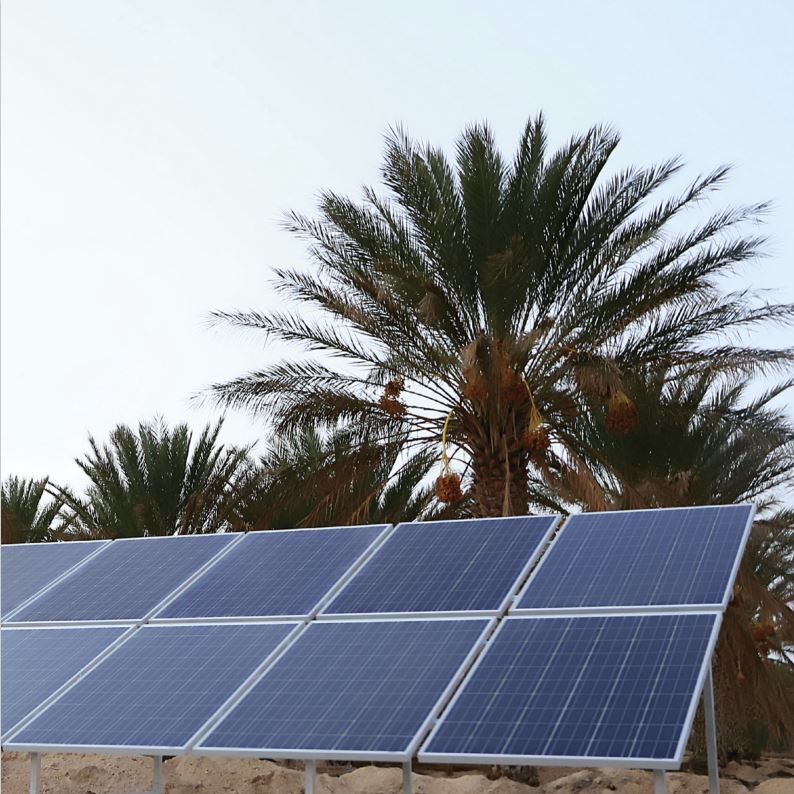
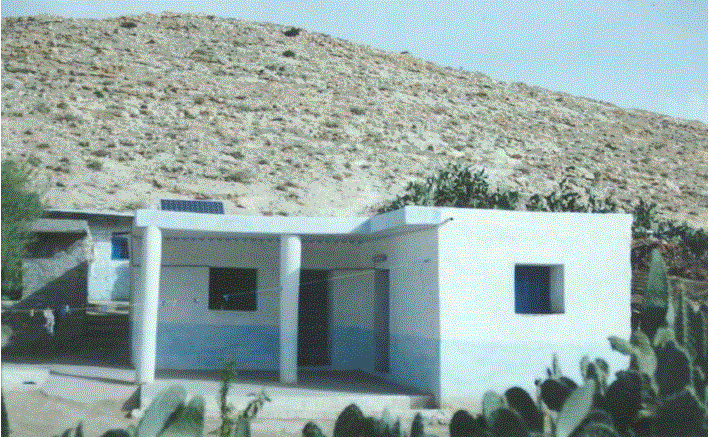
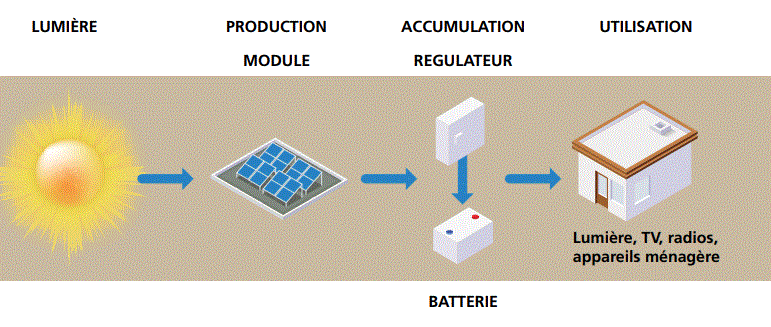
Solar photovoltaic energy is produced from the sun’s radiation. The photovoltaic cell, mainly made of silicon, is the fundamental electronic component. It harnesses the photoelectric effect to transform the electromagnetic waves emitted by the sun into electricity. Several cells connected together form a photovoltaic solar module, and several modules together form a solar installation. The electricity produced can be either consumed directly or stored on site using batteries.
The choice of installing a photovoltaic solar system generally depends on three factors:
- The distance from the electrical grid and the cost of extending a line to the operation.
- The operating and maintenance costs of a solar system compared to other energy solutions.
- Uncertainty about future electricity prices and rising fuel costs.The sizing of the solar installation mainly depends on the daily electrical energy needs, types, and quantities: lighting and other specific uses.
In all cases, it is recommended to seek advice from professionals. Your supplier will explain and advise you on the optimal sizing of your installation. You can also contact the ANME (National Agency for Energy Management) services in your region or in Tunis. The ANME specialists will advise you.
The installer shall provide the installation beneficiary with the following documents in French and Arabic language:
- Detailed electrical plans and diagrams of the installation
- Identification on plans of the location of the various components, photovoltaic modules, and corresponding connections
- Instructions for use and operation of the photovoltaic system, the inverter, the pumping system, and the equipment provided
- A preventive maintenance manual for the installation with a proposed maintenance contract
- Equipment and installation warranty certificates
- A description of the system intervention procedure and safety instructions
In addition, the company shall provide simplified instructions for the use and inspection of systems and the marking of all adjustment elements and indicators provided in French or Arabic, at the beneficiary’s choice.
A minimum of 3 hours of on-site training for the user is required to ensure that they have understood the basic system configuration, normal operating procedures, safety rules, handling of minor faults, as well as routine services and maintenance.
Demand your installation supplier for a final invoice and a warranty certificate.
Before signing your contract, carefully check the warranty conditions offered by the supplier.
Be aware that the warranties generally applied to photovoltaic solar systems are:
- One (1) year full warranty on installation and accessories at the supplier’s expense
- Five (5) years full warranty on the proper functioning of the system, provided that a maintenance contract is concluded for the 4 years following the first year of installation
Also demand a maintenance contract from your supplier. The maintenance contract is mandatory to be able to benefit from the premium and the guarantees offered by the supplier.
To ensure optimal performance and proper functioning of your solar system, regular maintenance is essential.
- Annual Maintenance: It is recommended to have a maintenance operation performed annually by your supplier.
- Panel Cleaning: Gently wash and wipe the glazing of the solar panels once or twice a year, or more often if necessary.
- Connection Check: Regularly inspect the condition of the connections, as they can be affected by weather conditions. In case of failure, contact your installer.
- Safety: For your safety and that of the installation, avoid handling the system components. Only your installer is authorized to intervene.