

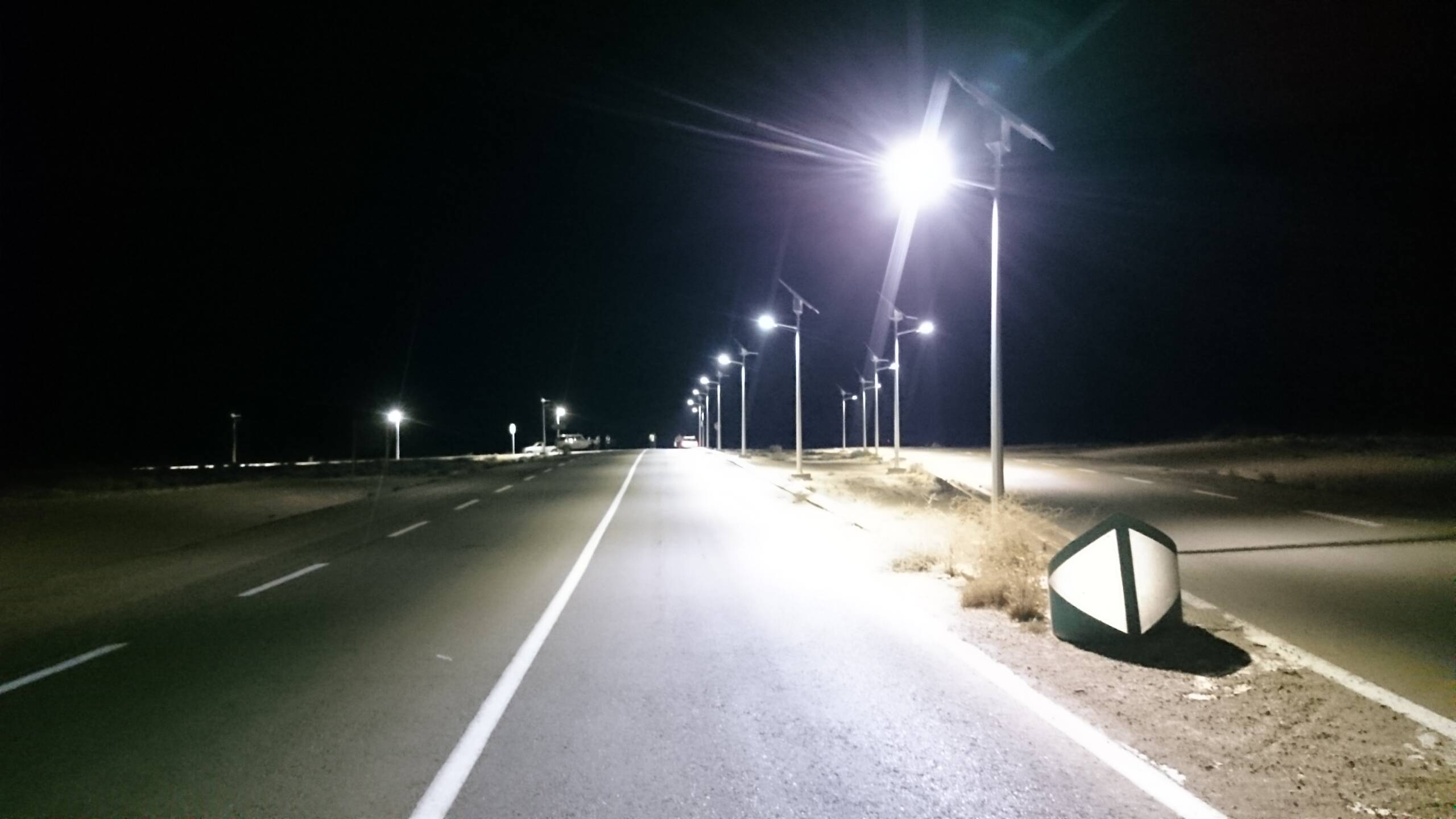
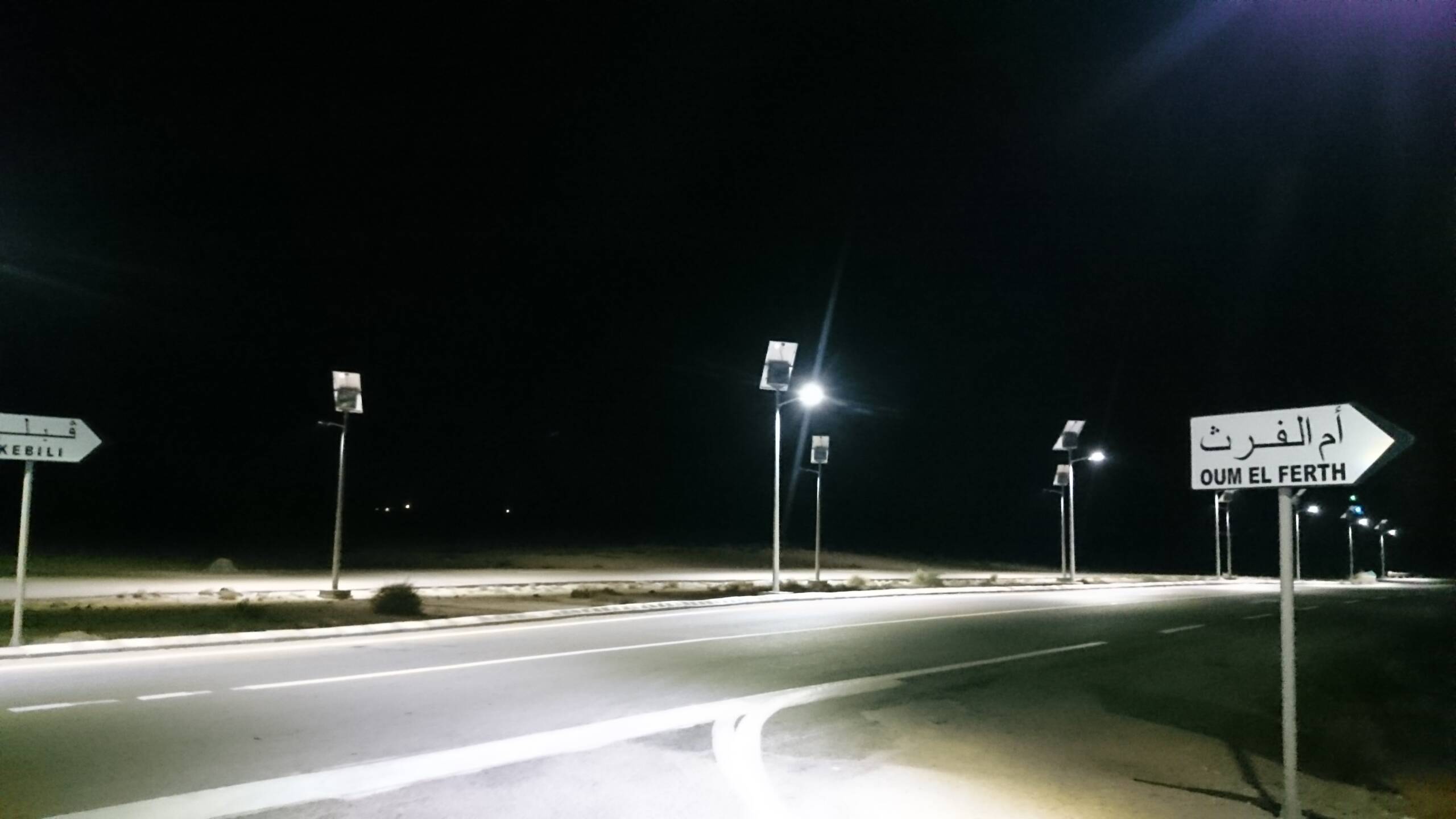
Solar photovoltaic public lighting is a revolutionary professional solution for public lighting that comes in various models. It is ideal for lighting pedestrian walkways, national roads, public squares, parks and public paths, and campsites.
The street lamp system generally includes the following basic components:
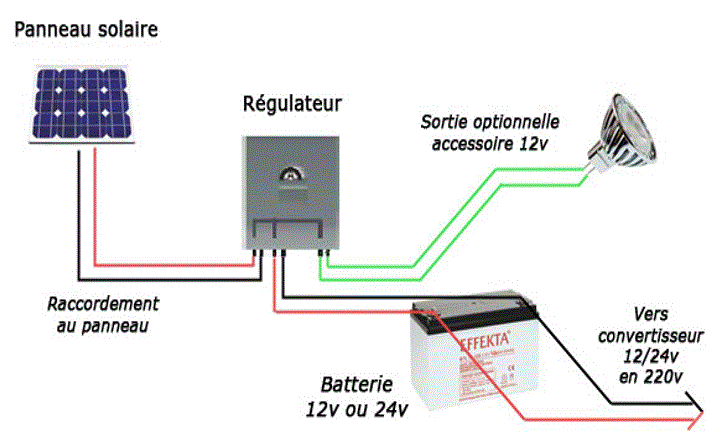
- The photovoltaic panel is composed of photovoltaic modules (PV) connected to each other and fixed on a support structure. It produces the required amount of electricity.
- The battery powers the load and stores the electrical energy from the conversion of solar energy; the anti-return diode prevents the battery from discharging through the PV modules in periods of darkness.
- The charge regulator protects the battery against overcharging from the energy produced by the PV modules and usually includes protection against deep discharges of the battery. The indicators on the regulator also provide information on the operation of the system: it is the system’s dashboard.
- The luminaire illuminates the target location with white light using high-efficiency 50W LED technology, turning on at sunset and off at dawn.
- The cables provide the connection of the electrical components of the system (including grounding and fixing accessories).
- The pole or mast is a long, rigid piece planted vertically and serving as a support for all the components listed above. The pole must support one or two luminaires, the solar photovoltaic modules, and possibly the battery and electronic accessories.
Each component of the system is sized according to the technical constraints of the system. The characteristics of these components must be well understood to determine the operating range of the system. The operating principle of a solar street lamp is that the solar energy accumulated throughout the day will be used during periods of darkness by the solar street lamps to illuminate the roads. Indeed, solar street lamps, by means of their photovoltaic panels, receive solar radiation and then convert it into electrical energy, which is then stored in batteries. At sunset or during periods of darkness, the lighting system turns on and illuminates the places. This operation is controlled by means of an electronic device allowing to choose the lighting time of the luminaire and to modify this time according to the energy available in the charge accumulators.
The installation of these autonomous street lamps has avoided heavy civil engineering work (trenching, road repair) and the installation of a network. A concrete block is sufficient for ground anchoring. The integration of these energy-autonomous lighting solutions has therefore facilitated installation work and limited investment.
- Ministry of Equipment
- Isolated rural local councils
- Ministry of Defense, Ministry of the Interior: Border posts
The choice of installing a photovoltaic solar system generally depends on three factors:
- The distance from the electrical grid and the cost of extending a line to the operation.
- The operating and maintenance cost of a solar system compared to other energy solutions.
- The uncertainty about future electricity prices and the rising costs of fuels.
Sizing aims to determine the peak power of the solar generator and the battery capacity, based on the site’s sunlight data on one hand, and the user’s electrical needs on the other. The choice of the solar system components allows the required equipment to be used during the requested period (i.e., throughout the year or for a specific period), with a predetermined availability.
The following steps will allow you to approximately size a photovoltaic system. First, it is necessary to estimate the electricity needs and establish the duration of the minimum sunshine period in the region where the system will be installed. The data will then allow you to size the battery capacity and the photovoltaic module power.
In all cases, it is recommended to seek advice from professionals. Your supplier will explain and advise you on the optimal sizing of your installation.
You can also contact the ANME (National Agency for Energy Management) services in your region or in Tunis. The ANME specialists will advise you.
Demand a final invoice and a warranty certificate from your installation provider.
Before signing your contract, carefully review the warranty conditions offered by the provider.
Be aware that the warranties generally applied for photovoltaic solar systems are:
- One (1) year of total warranty on the installation and accessories, borne by the provider;
- 10 years for the module, 5 years for the battery, 2 years for the regulator and the lighting;
- Five (5) years of total warranty for the proper functioning of the system, provided that a maintenance contract is concluded for the 4 years following the first year of installation.
Also, demand a maintenance contract from your provider. The maintenance contract is mandatory to benefit from the premium and the warranties offered by the provider.
Please note that the efficiency and proper functioning of your solar system are best when it is well-maintained.
- An annual maintenance operation is recommended. Your supplier will perform it.
- Gently wash and wipe the glazing of the solar panels once or twice a year, or whenever necessary.
- Periodically check the condition of the connections. These can be affected by weather conditions. If you notice a failure, contact your installer.
- For your safety and that of the installation, it is advisable not to handle the system components. Only your installer is authorized to do so.